


ABHA Scan and Share: How QR-Based OPD Registration Reduces Patient Waiting Time T+B11
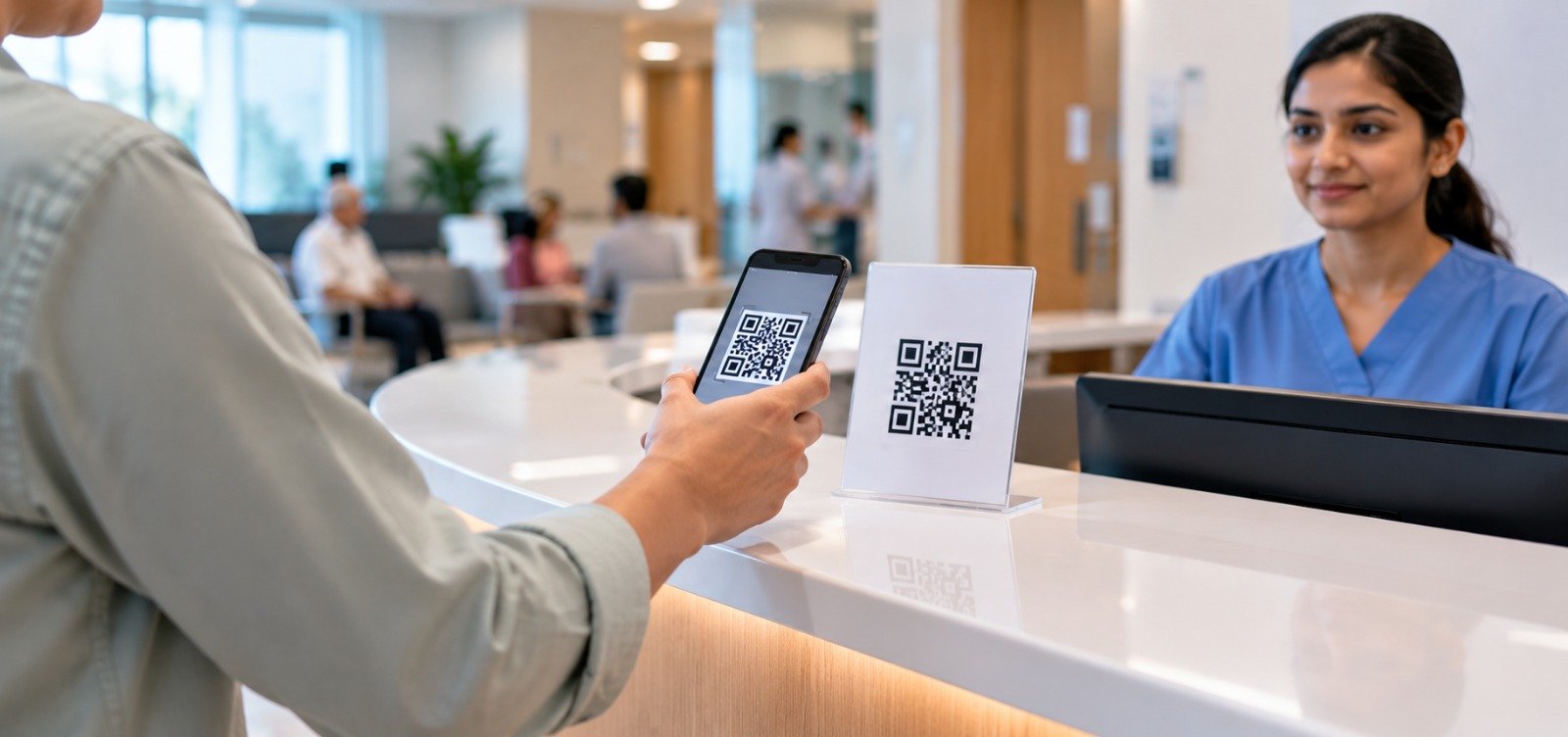
In any hospital, the Out-Patient Department (OPD) registration counter is the biggest hurdle in delivering hassle-free healthcare. Countless hours are wasted due to long queues, tedious manual data entry, and spelling mistakes at the front desk. The Ayushman Bharat Digital Mission (ABDM) introduces a QR code-based OPD patient registration system that helps hospitals and clinics reduce waiting time, digitise patient data entry, and eliminate spelling errors.
Overview of ABHA Scan and Share OPD Registration
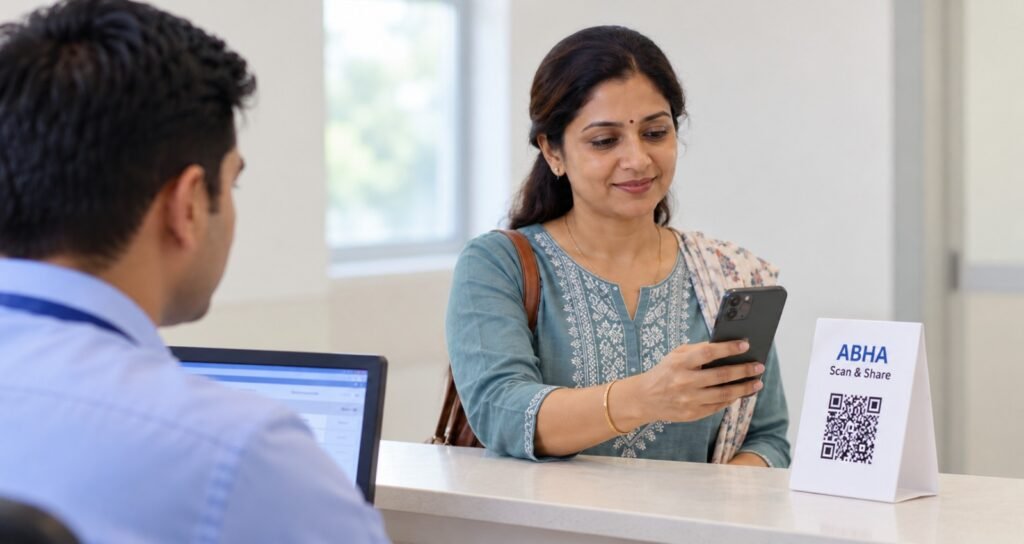
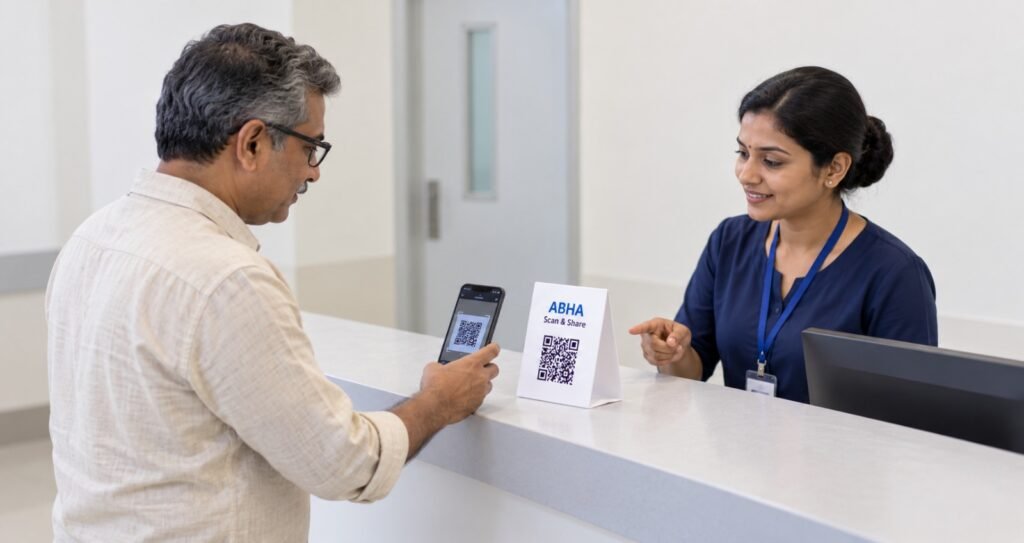
ABHA Scan and Share is an innovative QR code-based OPD patient registration service launched by the National Health Authority. Hospitals and diagnostic centers utilizing this system can install a single ABDM-compliant QR code at registration counters and waiting rooms.
Rather than providing personal details to a front-desk receptionist, patients only have to scan the QR code using an official ABDM mobile app (e.g. ABHA apps, Aarogya Setu, etc.) to digitally consent to sharing their personal information with the hospital’s Hospital Management Information System (HMIS).
ABHA Scan and Share QR Code Based OPD Registration Process
The Scan and Share OPD registration process is extremely simple and consists of only 4 steps:
- Scan the QR Code: The patient scans the QR code displayed at the hospital’s entrance/reception using their mobile phone’s camera or any other ABDM-compliant application.
- Review & Consent: The patient reviews their pre-filled ABHA profile (name, age, gender, address and ABHA ID) and electronically consents to share their demographic information with the hospital.
- Token Generation: The hospital’s HMIS automatically uploads the patient’s electronic demographics to its records and issues a token to the patient.
- Collect OP Slip: The patient only has to visit a self-service or assisted counter to pay any applicable registration fees and collect their OPD slip/token – eliminating the need to stand in long queues at the front desk.
Traditional OPD Registration and ABHA Scan & Share OPD Registration Difference
- Average Queue Time: 20 to 60+ minutes per patient; less than 1 to 2 minutes total
- Data Entry Speed: Manual data entry by counter clerk (3–5 min/patient); electronic data transfer directly from ABHA
- Demographic Accuracy: High risk of typographical errors in patient details; 100% accurate data directly pulled from ABHA
Benefits of QR Code-Based OPD Registration to Hospitals and Patients
- Feature / Metric: Traditional OPD Registration ABHA Scan & Share OPD Registration
- Average Queue Time: 20 to 60+ minutes per patient; less than 1 to 2 minutes total
- Data Entry Speed: Manual data entry by counter clerk (3–5 min/patient); electronic data transfer directly from ABHA
- Demographic Accuracy High risk of typographical errors in patient details; 100% accurate data directly pulled from ABHA
Some major benefits of QR code-based OPD registration for healthcare providers:
- No More Typographical Errors: Direct upload of patient data from ABHA to HMIS eliminates any potential data entry errors.
- Reduced Front-Desk Workload: Helps hospitals handle increased patient traffic without having to hire additional front-desk staff.
- Simplified Re-Visits: Patients only have to “Scan and Share” to instantly re-link their previous health records with the new hospital visit.
- Assisted Registration: Elderly patients or patients’ family members can scan the QR code on their behalf using their ABHA ID.
Complete ABDM Compliance for Healthcare Facilities Using QR Code-Based OPD Registration
QR code-based registration is an essential step toward achieving ABDM compliance by healthcare facilities. EMR software companies such as Medimaze Solutions offer end-to-end HMIS solutions for hospitals and clinics that are officially ABDM-certified. These solutions typically include front-desk patient registration tools, creation of personal ABHA records, integration with LIMS and EMR systems to help medical facilities modernise their front-office operations and reduce patient waiting time.
Conclusion
ABHA Scan and Share service provides a unique value proposition to Indian healthcare facilities looking to reduce patient waiting time and optimise the front-desk registration workflow. By digitizing the tedious manual paperwork, QR code-based OPD registration helps hospitals and clinics provide a consistently better patient experience.

Author