


AI in Laboratory Reporting Autoverification, Delta Checks and Faster Turnaround
The clinical laboratory is the backbone of modern healthcare. Doctors and surgeons depend on laboratory reports to reach conclusions about a patient’s diagnosis and subsequent treatment. However, when the number of tests done in a day exceeds a certain threshold, and the required precision is exceptionally high, the possibility of errors increases manifold. How does the concept of Artificial Intelligence help clinical laboratories? In what ways can it improve the turnaround time? The following paragraphs will address these queries.

Autoverification Saves Time for the Most Critical Tests
Doctors and surgeons are only able to release laboratory reports after they have been manually verified by clinical pathologists. This is done to ensure that no erroneous information is relayed to the hospital management or the concerned physician.
However, the manual task is both tedious and error-prone, especially when a large number of tests need to be processed on a daily basis. The application of AI drastically reduces the workload of the laboratory specialists.
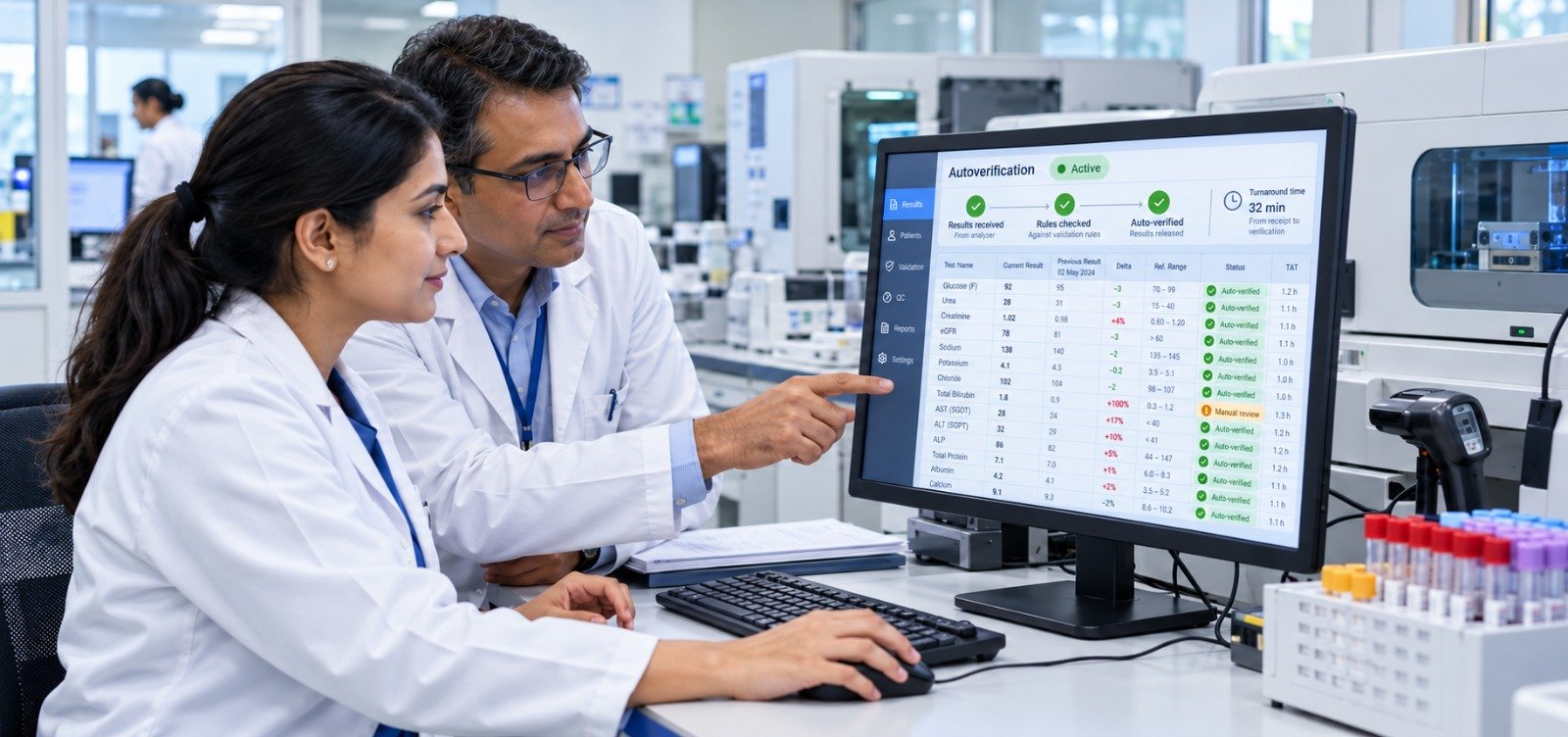
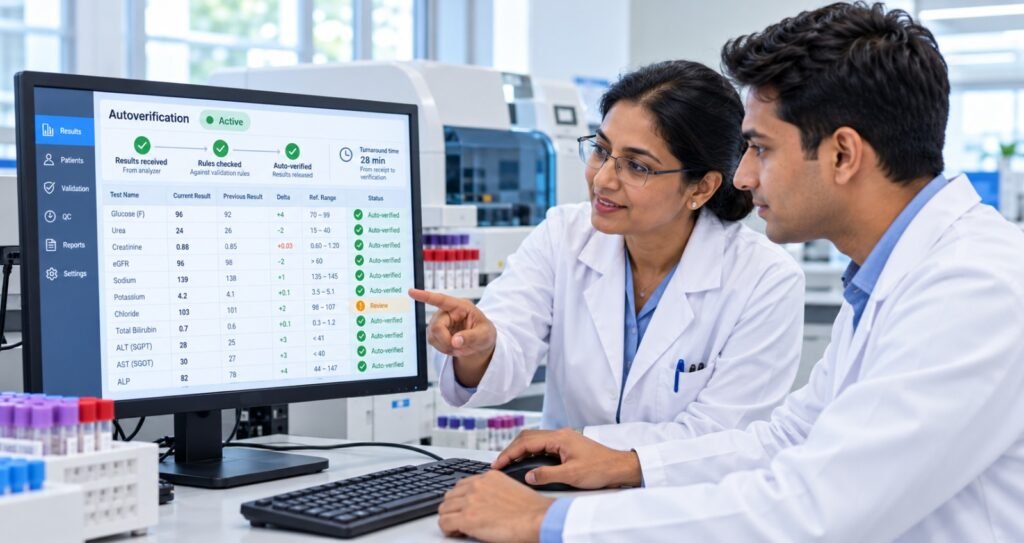
How? By introducing rule-based verification that helps auto-verify and release routine laboratory results. This allows the pathologists to focus on the more critical tests that require extra caution.
Reduction of Turnaround Time
Turnaround time (TAT) refers to the time taken by the laboratory from the receipt of a specimen to the release of the final report. It is of utmost importance that laboratories reduce TAT so that patients can be treated without delay, especially in time-sensitive procedures such as emergency care or intensive care. How exactly can the application of AI help reduce TAT?
Let’s find out about TAT.
When artificial intelligence is used, laboratory tests can be auto-verified and released without the need for manual intervention. Therefore, physicians do not have to wait for hours or even days for test results. Another way AI can reduce TAT is by predicting busy periods for the laboratory so that the staff can be prepared ahead of time.
Improved Delta Checks Help in the Detection of Abnormal Results
A delta check is a comparison of a patient’s two laboratory test reports. If the results of the two reports differ beyond a specified threshold, an alert is raised. Clinical laboratories conduct delta checks to confirm whether an unexpected change is a result of a sudden decline in a patient’s health or an error that has occurred during the testing process.
Performing delta checks can take a lot of time, especially if patients have a very complex medical history or if they are undergoing treatment for a chronic illness.
Artificial intelligence can help by identifying results that require further examination and verifying the others.
To Conclude
Laboratory reports are extremely crucial for patient diagnosis and treatment. The modern-day approach of applying artificial intelligence proves to be of immense significance to clinical pathologists. The use of automated verification, improved delta checks, and faster
report generation assists medical professionals in providing better healthcare services to patients. Adopting AI-powered platforms from Medimaze Solutions enables clinical laboratories to work at peak efficiency, while still providing the highest level of diagnostic accuracy and patient care.

Author